
Reaching More Families in Need: Adapting CPP for Foster and Kinship Caregivers

A central mission of CPP is to ensure the program is both evidence-based and highly accessible to families from underserved communities. Dr. Sarah Beal, Professor and developmental psychologist at Cincinnati Children’s Hospital, has been working with the CPP team to adapt CPP for a new population of underserved families: foster and kinship caregivers. Foster and kinship care is a temporary, court-ordered arrangement in which children who cannot safely live with their parents are temporarily placed in out-of-home care with licensed foster caregivers or relatives.
Today, approximately 430,000 children in the US are in foster care. However, as Beal explains, most foster and kinship caregiver training focuses on topics such as regulatory compliance and cultural competence. Caregivers receive variable guidance on the practical aspects of caring for a child who is suddenly separated from their parents, struggling with trauma, and disoriented by their temporary caregivers’ unfamiliar routines and expectations. Beal wanted to create a program just for this highly vulnerable population of caregivers and believed CPP and its caregiver-centered, trauma-informed approach could be the perfect match. She recalls, “I saw the CPP materials and heard about what was in the program and I thought, there’s a lot of this that is exactly what our foster and kinship caregivers need.”
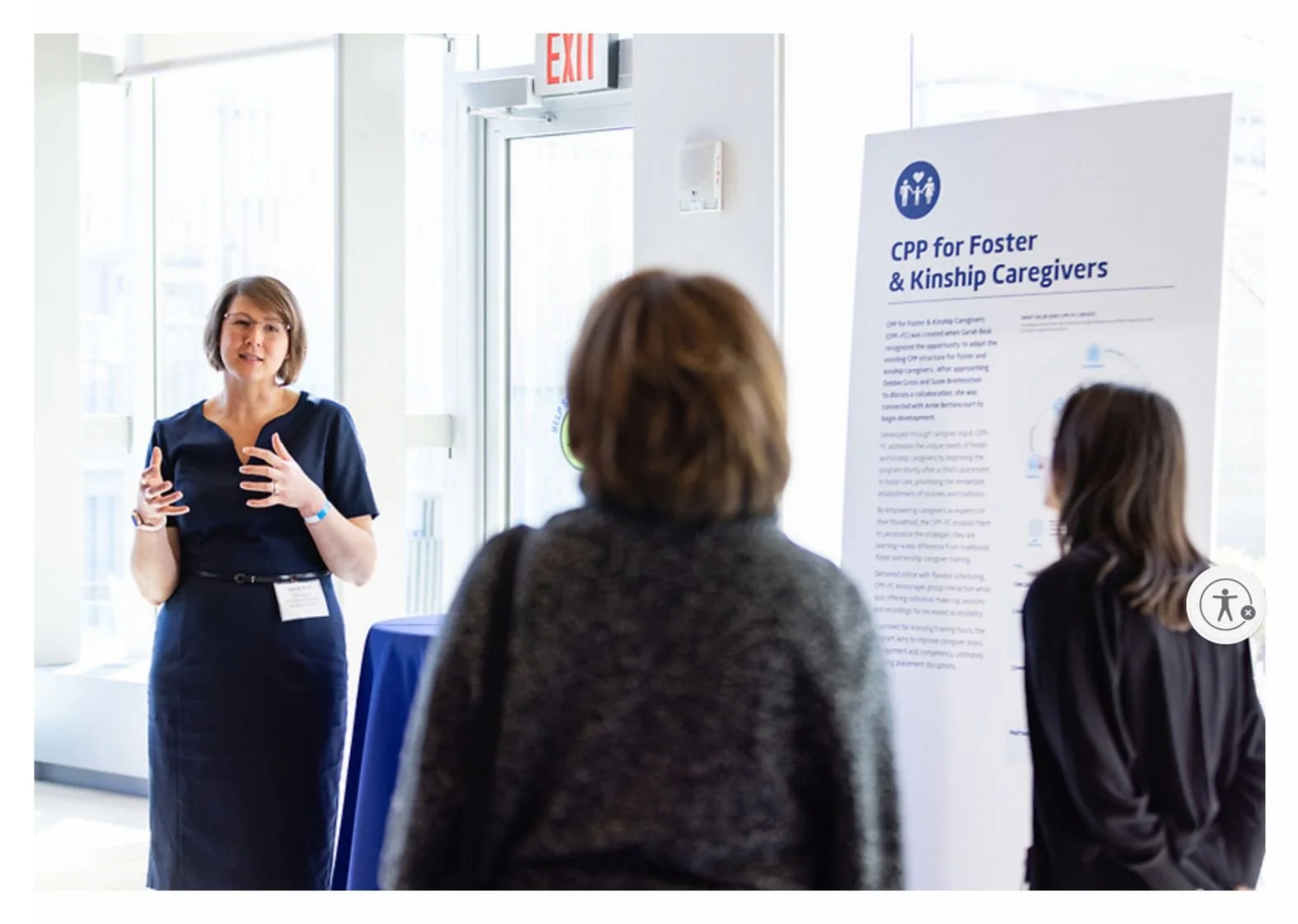
Co-creating CPP-FC with Foster and Kinship Caregivers
Beal received a grant from the National Institutes of Health (NIH) to adapt CPP for foster and kinship caregivers (CPP-FC) and test its efficacy for strengthening parenting skills, reducing caregiver stress, and improving placement stability. Consistent with CPP’s original design and subsequent adaptations, CPP-FC was co-created with foster and kinship caregivers. Beal and her team also included clinicians and professionals with expertise in CPP and child welfare to review and adapt CPP materials. For example, based on their feedback, group leader materials were revised to include more information regarding trauma and behavior challenges unique to children in foster care. Discussion questions linked to the CPP videos were modified to address challenges unique to foster and kinship caregivers. Another recommended change was to reverse the order of the first two CPP sessions so caregivers could focus first on establishing routines with their newest family member (a topic typically addressed in the second CPP session). Once routines are clarified and established, CPP-FC then introduces the concept of child-centered time. All CPP-FC groups are virtual, further enhancing the program’s accessibility, allowing caregivers living anywhere in the Cincinnati area to participate. Beal and colleagues have described the process they used to develop CPP-FC adaptation in a recent paper published in the journal Prevention Science.
Looking Forward to Next Steps for CPP-FC
The randomized clinical trial involving 300 caregivers will end in 2027. Feedback from caregivers thus far has been very positive, with many expressing deep appreciation for the program’s content and flexibility and holistic approach to both child behavior and caregiver wellbeing. Caregivers really appreciated the opportunity to meet other foster and kinship caregivers, feel supported, learn from each other and be their authentic selves; ‘Nobody was judging me’. They also saw the strategies work. As one caregiver reported, “I actually had the notice [to end placement] written up and I ended up not turning it in because I saw that the strategies were really working.”
When asked about next steps, Beal has already begun conversations with their healthcare system about how to scale and sustain CPP-FC. If CPP-FC research demonstrates effectiveness, the program could be expanded to reach more foster and kinship caregivers and potentially be incorporated into foster care certification training. CPP is already being offered preventatively to reduce the risk of children entering foster care. Dr. Beal suggests that CPP could also be offered to families at the conclusion of their welfare system involvement to support reunification with their children.
“It makes me happy talking about it because to be able to say to caregivers ‘your feelings are normal. It’s not a baby you brought home from the hospital. It’s a 7-year-old who a case worker dropped off at your house yesterday. But we can still support you and create these developmentally normative, typical experiences that are so important for you and this child.”
We look forward to learning more about the outcomes of this important work. Thank you, Dr. Sarah Beal and your team!